
It might seize you in the middle of the night, or perhaps at the beginning of a work meeting, or maybe while driving your kids to soccer practice. Wherever it happens, it can overwhelm you. Your mind won’t stop running. Your body is tense. Your heart is racing. You can’t breathe! You can’t relax and enjoy yourself. If you have ever felt a combination of these sensations, you have probably felt anxiety—a common experience among adults and adolescents. Whether you accept it or not, anxiety is part of a normal, healthy life. Diagnosable anxiety disorders, however, are different than normal, everyday anxieties. A hallmark characteristic of an anxiety disorder is excessive fear or anxiety about a real or perceived threat (DSM-V).
According to the Substance Abuse and Mental Health Services Administration (SAMHSA), nearly 40 million people in the United States suffer from an anxiety disorder in a given year. That’s 18 percent of the population! Specific anxiety disorders include generalized anxiety disorder, selective mutism (failure to speak in social situations even when able to speak in other situations), specific phobias (fear of animals, objects, etc.), social anxiety disorder, panic disorder, or agoraphobia (fear of having a panic attack or other embarrassing symptoms in locations such as public transportation, standing in a line, etc.). Some anxiety disorders, such as phobias and generalized anxiety disorder, most often begin in childhood around 11 years old and can continue into adulthood if left untreated. These two disorders are the most common anxiety disorders in adulthood according to SAMHSA.
Because of their belief that things will not change, or that they just need to get over it, many suffering with an anxiety disorder do not seek treatment. The good news is that anxiety is treatable! Your biology has a lot to do with an anxiety disorder; therefore, a first step in reducing anxiety includes dealing with the body’s physical response to stress.
Diaphragmatic Breathing
Your body’s internal organ regulator, your autonomic nervous system (ANS), has two applicable parts of the solution. First is the sympathetic nervous system (SNS), which is in charge of your fight-or-flight responses. This part, for example, pumps up the mailman’s body so she can outrun that dog hiding in the bushes. Second is the parasympathetic nervous system (PNS), which aids in calming your body. This part helps her body deescalate after she has escaped that dog so she can return to delivering the mail as usual.
When you feel anxious, your SNS is engaged. To help calm your body in these moments, the key is to activate your PNS. The exercise outlined below (partially adopted from The Anxious Brain: The Neurobiological Basis of Anxiety Disorders and How to Effectively Treat Them) triggers this part of your ANS.
How to do it:
- Lie down, stand, or sit in a comfortable position. Make sure you are “grounded” by creating an open posture with both feet on the floor and your back against a chair or bed. If you are crying, in the fetal position, or hunched over, this technique is difficult to do.
- Breathe in deeply. Picture a water balloon being filled with water as you first fill up your abdomen with air and then your chest. Feel the warmth and the weight of the air as you breathe in.
- Breathe out with an elongated breath—longer than it took you to breathe in. Purse your lips as you breathe out. This will slow your breathing. Breathing out slowly will help activate the PNS, which helps calm your body—the whole purpose of this breathing technique.
- As you breathe in and out, focus on the physical sensations you experience. Focus on your feet touching the ground, your abdomen and lungs expanding and contracting, the feel of air rushing over your tongue and through your pursed lips. Notice how your head, arms and hands feel. Doing this will help you be present and in-the-moment.
- Practice! This is a skill that must be developed. Try doing it while you are at work, stopped at a traffic light, or at home. Do each cycle (breathing in and breathing out) ten times or more, as you learn to engage your PNS.
- If you feel dizzy, light headed or out of breath, do not continue this technique. If your breathing is restricted or obstructed there may be other issues to consider. Speak with a therapist or doctor about the appropriateness of this exercise for you. This technique is a good start to help reduce anxiety in the moment, but is most successful when done in conjunction with therapy.
Anxiety disorders affect millions. Those who suffer with anxiety often feel there is no solution. But basic biology tells us differently. Activating our PNS through breathing techniques really does work—give it a try next time you feel anxiety creeping in. You might be surprised at how effective these simple breathing techniques can be!
Originally published on Utah Valley Health and Wellness Magazine
Written by Dr. Triston Morgan
 All of us, from cradle to grave, are happiest when life is organized as a series of excursions, long or short, from the secure base provided by our attachment figures. – Dr. John Bowlby
Have we really cracked the code on love and romantic bonding? Perhaps. Scientists, poets, and lovers have long grappled with the question: “What makes romantic love work?” Through the work of Dr. Sue Johnson and the development of Emotionally Focused Therapy, it looks like we have an answer.
Through decades of research on the importance of emotional bonding and what it is like to feel disconnected, isolated, and alone, relationship researchers are starting to unravel the mystery of love and adult romantic bonding and how to mend loving ties. The truth is, we are all hard-wired to connect to one another. This drive to connect is infinitely stronger in family and romantic relationships. To be emotionally isolated is harsh on our brains. Loving connections offer us a safe haven to go to where we can maintain our emotional balance, deal with stress, and respond more lovingly to our romantic partners. Essentially, when those connections are secure and strong, love is safe; love flourishes.
Unfortunately, disconnections between couples do happen and frustration, sadness, and anger are all too common in marital relationships. When those secure and loving bonds are threatened, emotional “primal panic” and a cycle of negative interactions ensues. These wounds can be difficult to repair for couples when left to their own abilities, and therapy is often the last step before looking to end the relationship. Unfortunately, many well-meaning therapists utilize their individual-based, time-tested techniques and attempt to apply them to relational interactions, which usually has little effect in restoring their loving bonds. In addition, many therapeutic techniques focus on helping partners change behaviors or thoughts, or teaching them communication skills. The common result from these approaches and techniques is that they usually struggle to gain traction, and the couple leaves therapy with less hope than before.
But there is hope. Within the last 25 years, a substantial amount of research has emerged that gives hope to couples on the brink and helps them tune in to their underlying emotions, identify their negative patterns of interaction, repair their attachment, and eventually create new patterns of bonding and positive interactions. This model is Emotionally Focused Therapy.
Grounded in the theory of attachment, Emotionally Focused Therapy (EFT) is an experiential, short term, structured, and tested model of therapy designed to help couples identify their negative communication patterns, interrupt this pattern, and create more positive, bonding, and secure emotional patterns. EFT does not see individuals as “sick” or unskilled, but rather “stuck in habitual ways of dealing with emotions with others in key moments.” As the title reflects, priority is given to emotion as a key organizer of inner experiences. EFT looks within the emotional experience of the couples and how they navigate their emotional connectedness. Dr. Sue Johnson has said, “The EFT therapist has a map. A map to relationships and how they work. A map to how they go wrong. And map to what is needed to put them right.”
A substantial body of research has shown promising results of the effectiveness of EFT. Research studies find that 70-75 percent of couples move from distress to recovery and approximately 90% show significant improvements. EFT is being used with many different kinds of couples in private practice, university training centers and hospital clinics, and many different cultural groups throughout the world. These distressed couples include partners suffering from disorders such as depression, post-traumatic stress disorders and chronic illness.
In my work with couples, EFT has resonated with them on many levels. No longer are couples focused on fights and long-standing disagreements about specific content or trying to change the other person. When couples go through the process of EFT, perpetual problems are framed as negative disconnections that are about protests by each partner for a more loving connection and emotional safety. EFT takes the blame out of conflict and resentment and moves to fighting together against a common enemy—the negative pattern. As couples progress through the stages and steps of EFT and begin to accesses deeper emotions that underlie their struggle for connection, a new interaction emerges as individual partners see and experience each other differently. When partners experience each other as more accessible, responsive, and engaged, old wounds and negative patterns are healed, and love and emotional safety thrives.
Originally published by Utah Valley Health and Wellness Magazine
Written by Dr. Jeremy Boden

As I work with individuals and couples, I like to educate them on how our brains and our bodies impact our relationships. Understanding the correlation between these elements seems easy enough, however, I often get the question, “How do I change my brain?” The answer to this question is a great starting point to create healing and allow new interactions to take place.
Our brains are wired for connection. Each interaction we have either strengthens or weakens the connections in our brains, thus influencing the relationships with those around us. The ability to allow one or two more heartbeats before reacting or responding to one’s partner is the ultimate goal. The better you are able to emotionally regulate (by allowing more heartbeats before reacting), the more positive your interactions with others can be.
There are many ways you can impact emotion regulation and the ability to create new experiences that improve relationship interactions. Some are easier than others, and some have been targeted to help with other areas of life. I’d like to highlight two very important ways to help increase heart rate variability and improve cognitive functioning so you are better prepared the next time you might want to fly off the handle. They are exercise and sleep.
Everyone knows that exercise is good for physical health, but it also has great implications for mental health and relationship health. Increased exercise impacts the way your heart pumps blood. Long-term exercise increases your heart’s efficiency in pumping blood to the body. It doesn’t have to work so hard, and this increases heart rate variability, or the amount of time in between heart beats in a given minute. Increased heart rate variability means more regulation (more parasympathetic, or calming, influences) on the heart, and thus, more flexibility in emotional responses. This means that you have more capacity to keep the breaks on when your fight or flight response is triggered, allowing you more time to thinking critically, solve problems, or socially engage before flying off the handle and reacting to environmental stimuli.
Additionally, exercise increases the volume of the prefrontal cortex—the area in the brain associated with learning and memory. Exercise also stimulates the growth of cells by releasing chemicals in the brain. These new cells are then cleaned, solidified, and bonded together to create new memories for individuals.
We have all heard that sleep is important and should be a priority. Sleep does a lot of thing for us—it helps with creativity, remembering physical tasks, and making decisions. Sleep also does two important things in the brain: creates and consolidates memories and clears out toxins. As neurons fire together (and therefore wire together), sleep helps to connect recent memories with earlier memories. This allows individuals to remember how they reacted in past situations, and react differently next time if they desire a different outcome.
Cleaning out toxins in the brain increases attention and memory, helps individuals think clearly, and even impacts the regulation of insulin. Not getting enough sleep inhibits the ability to clear out the toxins, which can be harmful to the connections that are trying to take place in the brain. Sleeping allows us the opportunity to create new and improved experiences each day.
There are many ways individuals can have more influence on emotional responses. These are only two, but by changing our brains and our physiology in the body, we are prepping ourselves for better interactions. Being mindful of how we can impact the physiology of our bodies allows us more control over how we interact with those around us. We increase our capacity to engage more positively and be more satisfied in our relationships.
Originally published by Utah Valley Health and Wellness
Written by Dr. Kayla Mennenga
 With a growing, stronger economy, many small-business owners are looking for loans to expand their operations. An owner may need working capital to support the company’s growth, want to consolidate debts into one loan on more favorable terms, or purchase additional real estate and equipment. Regardless of why a small-business owner is looking for financing, lenders usually apply the same rules to assess the financial wherewithal of the business.
Financial institutions assess the quality of the potential loan by testing the “Five C’s” of credit. The “C’s” are: character, capacity, capital, conditions and collateral. As a business owner, here are the five areas to consider as you prepare to obtain financing and assess how you’re doing. Each is important.
Character typically shows a small-business owner’s willingness to repay the loan. Lenders collect three years of financial statements to see trends and behaviors that borrowers display. Typically, three years is a long enough period of time for a small business to encounter a hiccup, a difficulty, or other hard times. By looking at the borrower’s behavior during a difficulty, the lender will learn how the borrower reacted when he had his back up against the wall. Did he continue to pay the obligations? Did he short-sell his property or close a company or line of business? These can be indicators of the borrower’s character.
Capacity…(read the rest of the story)
Written by: aga merx
Originally published by Utah Valley Health and Wellness

Backpacks, sharpened pencils, and carpools. Check, check, check.
The new school year is underway, and in a few more weeks most families will be settled into their new normal routine for the school year.
Are regular family meals part of your routine?
Consistent family meals are just as important to your student’s academic and social success as homework and study sessions. Research is replete with the developmental benefits including better performance in school, fewer risky behaviors, and fewer eating disorders among kids who share meals with their families.
When kids and adults are engaged in food preparation and sit down to eat together, everyone eats more fruits, more dark orange and leafy green vegetables, more whole grains, more calcium-rich foods, and fewer sugar sweetened beverages and fast convenience foods.
Children and adolescents are actively growing and essentially building their body a little bit every day. What raw ingredients are provided for building materials?
Food nourishes more than our cells and body systems. It also transmits a sense of identity and culture. Food gives us an opportunity for connection.
Researcher and best-selling author Brené Brown, PhD, often states that humans are hard-wired for connection. Each of us requires genuine authentic connections with others to give meaning to our lives. Food gives us a common ground to nurture those connections. Eating with others improves our well-being nutritionally and psychologically.
To have successful family meals, consider the following suggestions:
Plan ahead
People who plan meals ahead of time eat better, weigh less, and have fewer incidences of chronic disease. When we sacrifice time to think deliberately about our food, we make better choices.
Try these time-saving tips:
- Make a list of all the entrees your family enjoys eating and keep it in a visible place. When you’re stumped about what to plan, consult your list instead of re-inventing the wheel.
- Chop vegetables in advance on slow nights so they’re ready to cook or have plated for dinner another night.
- Take out meat to thaw the night before so something is ready to cook when it’s time for dinner.
- Try-slow cooker meals you can begin in the morning and enjoy later.
- Double or triple an entree when you cook so you can have leftovers or freeze a whole batch to eat later in the month.
- Prepare as much of dinner as you can while you’re cooking breakfast or lunch so you have less kitchen clean-up at the end of the day.
Ditch perfectionism…(read the rest of the story)
Written by: Erica Hansen MS, RD, CD
Originally published on Utah Valley Health and Wellness

Legend has it, Albert Einstein was once asked what the greatest invention of all time was. His answer? Compound interest. I am often asked when and how an individual can start investing. Those who follow these three simple rules will have the potential to improve their lives significantly.
Rule #1: For compound interest to be truly powerful, it must have the benefit of time. The more time, the better. Think of it like a snowball rolling down a hill. It starts out small and then gets bigger and bigger the longer it rolls.
For example, compare two investors who each put away $2,000 a year and earn 10% annually. The first investor starts at age 19 and puts away $2,000 per year for eight consecutive years and then holds it there. The second investor waits eight years and then invests $2,000 per year for the next 38 years. At the end of the 38 years, the first investor’s account will have grown to $941,054. The second investor’s account will be only $800,896. Because of the power of compound interest, the first investor avoids 38 years of payments and invests $60,000 less, but ends up with $140,158 more.
Small increases in rates of return make enormous differences over time. Everyone knows that a higher rate of return is better than a lower one. What most people don’t realize is that the benefit is exponential. A 15 percent rate of return is not merely three times more than a 5 percent rate of return. It can actually be anywhere from seven to seventy times more, depending on how long you invest. Start investing now.
Rule #2: You have to save money—and saving requires discipline…(read the rest of the story)
Written by: Dave Young
Originally published by Utah Valley Health and Wellness
 The phrase “Where history comes to life!” has been used to describe everything from museums to battlefield re-enactments, from stage shows to the big screen, and almost everything historical in-between. Now, this oft-used phrase will introduce a highly anticipated documentary film series, focused on the Roots of Knowledge project. In our last issue of Utah Valley Health & Wellness, we shared an article introducing this wonderful art project, which, through a stained-glass art wall display, will tell the history of the world through the advancements of man’s learning and knowledge. As we stated in that article, the stained-glass art wall will be unveiled on the campus of Utah Valley University in November of 2016. In addition to the physical display at UVU, a full eight-hour documentary series will be produced with the goal of bringing to life the stories and events depicted throughout the art-glass wall.
Making this historical piece of art come to life is the job of Utah-based filmmaker Lee Groberg and his team at Groberg Films. Groberg’s experience with historical documentaries is extensive, as he has produced and directed several historical based films, dating back to as early as 1992. When I asked Lee about his approach to taking thousands of years of history, as depicted in the art-glass wall display, and squeezing it into a four-part documentary series, each part being two hours in length, he concluded that this project will be one of his greatest professional challenges. Then again, he admits to having said that same thing before each of his previous historical films.
While discussing the filmmaker’s approach, Lee went on to say that, “We simply turn the clock back by a few thousand years; then, with research, we tackle the topic so that [the film] is believable. These sorts of projects are exciting to consider because of the challenges—with historians, art direction, props, wardrobe and talent—it is factual movie making at its best.”…(read the rest of the story)
Written by: Clint Wood
Originally published on Utah Valley Health and Wellness
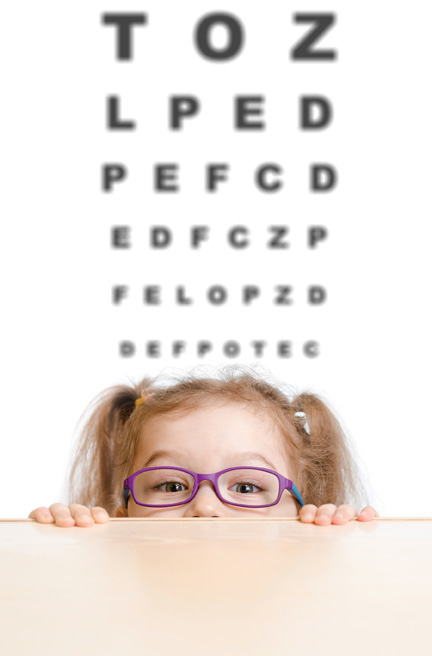
At least once or twice a month, I see patients well into their thirties, and even forties, who inform me that they have never had an eye examination. They claim that their vision has always been very good, and that they have had no need for a comprehensive examination. They are also very surprised to walk out of our office a week or two later with their new glasses—and can’t believe what they have been missing! Many wonder, How long have I been struggling to see? Could I have performed better as a child in school, and even sports?
The school years are a very important time in every child’s life. All parents want to see their children do well in school, and most parents do all they can to provide them with the best educational opportunities. However, too often, one important learning tool may be overlooked—a child’s vision.
It has been estimated that as much as 80% of the learning a child does occurs through his or her eyes…(read the rest of the story)
Written by: Dr. Chad Rigtrup
Originally published on Utah Valley Health and Wellness

It was December of 2010. I was sitting on a training table inside Lucas Oil Stadium in Indianapolis, making a phone call to my wife. She had given birth to our first child a few days earlier, and I was calling to reassure her that everything was alright. It was one of the last games of the season, and our second meeting with the Jacksonville Jaguars. The only thing I recall about the incident was getting ready to catch the ball, and then being face down in the turf with the Colts’ training staff around me. It was an all too familiar scene to the first concussion I had received, just a month and a half before, in Philadelphia. While sitting on that training table, it was pretty clear that I wouldn’t be finishing out the remainder of the 2010-11 season with the Colts.
During the next week I would go through the NFL’s concussion protocol, getting a standard MRI, seeing an independent neurologist, and eventually being told to just “take it easy” during the off-season. One common trait almost all professional athletes share is our desire to identify any weaknesses we may have, and make sure those weaknesses become strengths.
Naturally, my first priority during the off-season was getting my concussions dealt with and decreasing the possible long-term effects. Just resting and hoping it didn’t happen again didn’t sit well with me. For every other injury I had experienced throughout my career, I was told precisely what areas were affected by the injury, and was given an active rehabilitation protocol. This allowed me to strengthen the area affected in order to eliminate any overcompensation or chance of re-injury. It didn’t make sense to me why I wouldn’t take the same approach with the injuries my brain sustained…(read the rest of the story)
Written by: Austin Collie
Originally published on Utah Valley Health and Wellness
Photography by Mark A. Philbrick, Copyright BYU Photo 2007, All Rights Reserved

What if I told you there is something you can do for just thirty minutes a day that will significantly improve your happiness and well-being, and add years to your life? Would you do it? Well, that “thing” is… you guessed it: exercise. Although exercise and physical activity are among the best things you can do for your health, some older adults are reluctant to exercise. Perhaps they are afraid that exercise will be too hard, or that physical activity will harm them. But studies show that “taking it easy” is much more risky. Lack of physical activity can lead to more visits to the doctor, more hospitalizations, and more use of medicines for a variety of illnesses.
Exercise has been proven to help prevent or delay many diseases and disabilities, including some types of cancer, heart disease, and diabetes. It improves health in the frail or those with diseases that accompany aging. It helps us with our daily tasks of carrying groceries, climbing stairs, and reduces our dependency on others. For some, exercise alone is enough to improve mood and relieve depression. It can restore flexibility, accelerate recovery from an injury, and give us the energy to walk farther and dance longer.
For the most part, when older people lose their ability to function independently, it doesn’t happen just because they’ve aged…(read the rest of the story)
Written by: Michelle Wakefield
Originally Published on Utah Valley Health and Wellness