
May is Skin Cancer Awareness Month. Though skin cancer can be scary, it is also one of the most preventable forms of cancer. With summertime approaching, and more exposure to the sun’s harmful effects, we’ve put together a few guidelines to help you reduce your risk of skin cancer while you’re out enjoying the summer sun:
Explore Medical Grade Sunscreen/Sunblock
The majority of skin cancer cases are due to ultraviolet damage from sunburns. Medical spas, dermatologists and some plastic surgeons may carry, in their office, an advanced medical grade sunblock, offered in SPFs of 30 or higher.
There are now better formulated broad-spectrum protection sunblock offered to consumers. Better technologies and the use of nanotechnology offer new elegance and efficacy to well-known broad-spectrum sunblock ingredients, zinc oxide and titanium dioxide. Zinc oxide and titanium oxide are the two best ingredients for a broad-spectrum sunblock. They are used by SkinCeuticals, Obagi, SkinMedica and other doctor recommended skin care lines. It’s not new science, and the better formulations now have the micronized particles so they don’t leave that weird, white residue on the skin.
Optimize Healthy Effects of Sun Exposure
While you certainly need to avoid the skin damage associated with sunburn, sun exposure is required for optimal health. Renowned physician and best-selling author Dr. Joseph Mercola tells us: “If you accept the essential nature of UV light, then you can conclude that safe exposure to sunshine is possible by understanding your skin type, the UV strength at the time of exposure, and your duration of exposure. My advice has been clear: Always avoid sunburn.”
Darker-skinned people not only need more sun exposure to produce sufficient amounts of vitamin D, they’re also more protected from skin cancer due to their skin pigmentation. Yet, this important reality is simply ignored by dermatologists, resulting in most African Americans being at a radically increased risk of cancers and heart disease from vitamin D deficiency.
The following excerpts are taken from Dr. Mercola’s website (www.mercola.com):
”How the sun affects you depends on your complexion, the shade of which is determined by melanin … The anti-oxidizing molecule is so versatile at protecting and repairing DNA from UV solar radiation that creatures from humans to fungi deploy it … [T]he melanin sits atop cellular DNA like tiny umbrellas pointed … out to shield from incoming rays …
[T]he same ultraviolet wavelengths in the 290 to 400 nanometers range that trigger melanin production also spark vitamin D creation. You cannot make one without the other.
Humans evolved to produce two kinds of melanin … The MC1R gene determines the type of melanin the body produces. In the mid-zone such as the Mediterranean region, people … produce eumelanin, the pigment responsible for brown or black hair and for dark skin that tans easily …
[I]n far northern Europe, humans paled, adapting to lower light … with a different type of melanin, called pheomelanin, associated with fair skin and blonde and red hair with minimal protective value, but allowing more UV to penetrate to make vitamin D. ”
Caution with Mid-Day Sun
Mid-day is associated with the strongest sun rays. In North America the sun’s rays are strongest from 10:00 to 4:00. Depending on skin type, we can safely expose ourselves to the sun for 5 to 20 minutes before applying sunblock. Protective clothing, a broad rimed hat, and sunglasses can also be used to prevent UVA and UVB rays from having access to your skin…(read the rest of the story)
Originally published on Utah Valley Health and Wellness

Dental caries, or tooth decay, is the number one chronic infectious disease affecting children in the United States. When bacteria has access to sugars, it produces acid that breaks down teeth, forming cavities.
Although it is a common and destructive disease, dental caries is highly preventable. The best prevention is aggressive daily oral hygiene. The American Academy of Pediatric Dentistry (AAPD) recommends that children brush their teeth every morning and every night. They should be supervised and assisted by their parents until they are at least eight years old. Children should also floss daily, beginning as early as two years old.
A child’s diet plays a large role in dental cavities, and therefore the prevention of cavities. It is a common understanding that sugar is the source of energy for cavity-creating bacteria. What most people forget is that a lot of “healthy foods” contain natural sugars that can be broken down and used by bacteria. Here are a couple of helpful hints to follow:
- The stickier the snack or treat, the harder on the teeth
- It’s not how much sugar they get but how often they get it—meaning avoid snacking throughout the day, and especially bottles or sippy cups through the night.
These are a lot of “what not to do’s.” Some “to do’s” are:
Drink lots of water. Water is the only liquid that doesn’t have the potential to cause cavities. It can also help “wash” the teeth throughout the day when you don’t have access to brushing after each snack or meal.
Snack smart. Vegetables are healthy snacks that don’t have a lot of natural sugars. We can’t expect children to never eat candy, but it’s important to limit the types and frequency…(read the rest of the story)
Originally published on Utah Valley Health and Wellness
 The time is here. Summer is around the corner and you’re planning your family vacations! Most of us have a lot of things to consider as summer approaches. Soon the kids will be out of school, and summer plans start to interfere with the day to day regimen that was so earnestly established. How are you going to stay on target? I’ll let you in on a secret: You’ll more fully enjoy your summer, family vacations, reunions, and the many other activities planned if you have more energy and feel good for those fun packed months by staying consistent with exercising. Take advantage of the long days, keep yourself accountable, find weather appropriate workouts, and stay hydrated! Below we’ll go into further detail on each of these.
Lucky for us, when we set our clocks forward in March, we gave ourselves extra sunshine during the day and nice, cool, early mornings. Get out early for your exercise. You’ll feel refreshed and ready for a day full of fun, and you’ll skip the summer heat. If this time doesn’t work for you, wait until the weather cools off in the evening.
Next, ask yourself why you are working out…(read the rest of the story)
Originally published in Utah Health and Wellness
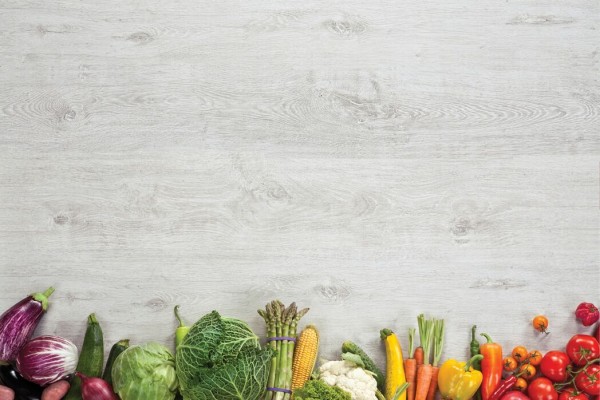
How many plants did you eat yesterday? Consider fruits, vegetables, nuts, seeds, and whole grains. These plant foods are the food groups most Americans do not get enough of. Less than 25% of American adults eat the recommended minimum of two cups of vegetables per day.
Sometimes food gets complicated with allergies, intolerance and disease, but more often than not we make nutrition more convoluted than it needs to be. The evidence supporting eating a diet rich in plant foods is overwhelming. We could all benefit from grounded, plant-based nutrition.
Getting Access to Great Plants
As the weather warms up, our options for great produce multiply. Aside from gleaning in-season produce at the supermarket, you may consider a few other options:
- Community Supported Agriculture (CSA): This is a system that connects families with farmers. You pitch-in financially to help a farmer produce. You get to know your farmer and his practices and receive part of the crop. Learn more at csautah.org.
- Buying co-ops: Grocery co-ops allow you to combine buying power with others in your area for lower grocery costs. One good produce co-op available across the nation is called Bountiful Baskets. You sign-up on the weeks you’re interested, pay an agreed upon amount ($15) and receive two big boxes of fruits and vegetables. At times you can add on whole grain products and specialty vegetables like an Asian pack. Learn more at bountifulbaskets.org.
- Community gardens: These can vary in formality. Church organizations, hospitals, non-profits, neighbors, and families can organize themselves and share a plot of land to garden. Clear guidelines should be established before beginning so no one is left with others’ work or expenses.
- Farmers’ markets and farm stands: Utah County boasts several farmers’ markets that give you the opportunity to shop local, fresh produce. Find them beginning in June at the Happy Valley Farmers’ Market in American Fork, the BYU Market at LaVell Edwards Stadium, the Provo Farmers’ Market, and Thanksgiving Point in Lehi.
- Plant your own garden: If you have the time and means, planting your own garden can be rewarding, both physically and psychologically.
Gardening Benefits
Off-the-vine produce gives you maximum nutrition and flavor because you pick food when it is ripe and eat it fresh.
Gardening is a great alternative to getting a pet to teach your kids responsibility. They take ownership of their plot and plants, eat better because they are invested, and you don’t have to wake up in the night to tend to the whimpering garden like you would a puppy. It’s a win-win!
Garden produce not only provides lots of health-promoting vitamins, minerals, fiber, water, and phytochemicals, but also some much needed vitamin D (sunshine) and outdoor therapy. At our latitude we do not get many months of good vitamin D gleaning, so take advantage of good weather to stock up!
Gardening can yield cost savings in…(read the rest of the story)
Originally published on Utah Valley Health and Wellness
 If you suffer from headaches, you are not alone. 45 million Americans are suffering with you. Because so many experience headaches, many think it’s normal—but it’s not. It is not natural to have headaches daily, or even three to four times a week. Nor is it typical to take headache medication on a daily basis just to prevent or minimize the intensity of your pain. Standard headache sufferers experience headaches two to three times per year, each lasting about three to four hours. If you endure headaches more frequently than this, something is wrong.
The most common type of headache is a tension headache. This type of headache is not caused by a disease or serious pathology, but is due to trauma or poor posture that causes your upper vertebra and muscles to compress or irritate a nerve that starts at the base of your skull and goes right above your eye.
Knowing that the majority of headaches stem from these things means that there are actions you can take to limit the tension and decrease the time you spend suffering. Muscle tension headaches can often be avoided by maintaining proper posture and neck movements while performing your normal activities.
What Can You Do?…(read the rest of the story)
Originally published on Utah Valley Health and Wellness

Our experience and independent research both show that most investors do not follow a strategy. In other words, they do not have a disciplined, systematic process they follow to make investment decisions. Their portfolio of investments often represents a patchwork of uncorrelated ideas that were sold to them by various salesmen over their lifetime. What may have seemed like a good idea at the time no longer makes any sense.
Take for example the first three months of 2016. Markets have been in turmoil with the S&P 500 dropping -10.5% and the NASDAQ losing -14.8%. After hitting their lows for the year both indexes have recovered about 10% of their value, erasing much of their losses.
Without a strategy it’s difficult to capitalize when the market drops and recovers. Even worse, if you sold out during the drop, you are down 10-15%. This is why following a solid strategy is so important to your long-term success. To be clear, luck is not a strategy.
There are two steps to follow when making a long-term strategy:
Step 1- Properly select your risk tolerance.
Decide in advance how much risk you can subject your account to. For some investors this means… (read the rest of the story)
Originally published on Utah Valley Health and Wellness

Check out our newest issue!
Local Utah Valley professionals give expert advice on a variety of health and wellness topics. Learn about healing pornography addictions, freeing yourself from headaches, nutrition, principles of healthy marriages and more.
Enjoy!

There are more than enough people around the valley willing to offer you advice or classes on gardening. But what if you knew the science behind all the garden advice/classes, so you could figure out the facts from the fiction, and have the best garden on the block? Well, I don’t have enough space here to give you all the scientific information you would need, but let me share some great points that will get you a step ahead of the rest. We are going to go a bit beyond the basics of gardening.
Here is the “Thick List” of things to know:
- HAVE A PLAN. This piece of advice really counts for a vegetable garden, but also works for flower gardens. Draw out where you will put what, and keep that plan so next year you have an idea of what was where. Also, take notes. What grew well, what did not, when you watered, disease and insect pressures, was it too sunny or too shady, how was your harvest, etc. The more time you spend on your notes and in your garden, the better you will become at gardening. You will learn from what you have done, and what you should have
- REASONABLE GARDEN SIZE. A study showed that the gardening activity that consumed the most time was harvesting. This study showed that a garden size of about 10 x 10 ft was the ideal size for an average family.
- SOIL ORGANIC MATTER. The key to a good garden is…(read more)
Originally published on Utah Valley Health and Wellness

We use planning as a method to be successful and efficient in almost every aspect of our life. But do we plan for after our passing? Sorry to be the bearer of bad news, but we are all going to die. To properly plan for our death, we must ask ourselves several questions: How can I make sure my assets go to those whom I wish to have them? Who do I desire to make decisions on my behalf once I pass or if I become incapacitated? How do I make the distribution of my assets quick and efficient, while reducing my tax liability and the headache of probate?
As we move into spring, it’s the perfect time to “clean up” our affairs, along with our homes. Establishing a proper estate plan before your passing will be greatly appreciated by your family and loved ones.
What do I need in a proper estate plan?
Wills and Trusts
These two are essential to a proper estate plan. A will is a document that directs how your property and assets are distributed. You can be very specific in a will as to what and how much is given to any individual or entity. You may even attach certain conditions. You choose an executor to oversee the distribution of the assets. If you do not have a will, your assets will be…(read more)
Originally published on Utah Valley Health and Wellness

If losing weight and looking better isn’t enough motivation to inspire you to exercise, how about the fact that the latest research shows that regular physical activity may be the best preventive drug we have for many health problems?
Studies show that exercise reduces the risk of early death, helps control weight, and lowers the risk of heart disease, stroke, type 2 diabetes, depression, some types of cancer, anxiety disorders, cognitive decline, and hip fractures. It can even help improve sleep, memory, concentration and mood.
Recent research continues to add benefits to the list. One study found that supervised exercise may help relieve treatment-related pain among some breast cancer patients. Another study showed physical activity may be as effective as medication in preventing early death in people who have had heart attacks or strokes.
Timothy Church, a physician and director of preventive medicine research at the Pennington Biomedical Research Center in Baton Rouge, agrees; “Exercise strengthens the entire human machine—the heart, the brain, the blood vessels, the bones, the muscles. The most important thing you can do…(read more)
Originally published on Utah Valley Health and Wellness